Ilford Station rubbish clearance guide
Posted on 30/04/2026
If you live, work, commute, or run a property near Ilford Station, rubbish has a habit of building up faster than you expect. One bag becomes three. A broken chair sits in the hall. A post-move box pile turns into a little mountain by the front door. This Ilford Station rubbish clearance guide is here to make the whole process feel less messy, less stressful, and a lot more straightforward.
Whether you are clearing a flat after a move, dealing with office waste, tidying up after building work, or simply trying to get rid of bulky items without the faff, the basics are the same: know what needs removing, know what can be reused or recycled, and choose a safe, lawful way to shift it. Near a busy transport hub like Ilford Station, timing and access matter too. Traffic, limited parking, narrow stairways, and busy footfall can all complicate a simple clearance job. A bit of planning goes a long way.
In this guide, you will find a practical walkthrough of how local rubbish clearance works, what to expect, common mistakes to avoid, and how to decide which approach suits your situation. If you want to explore related services as you read, you can also look at the broader services overview and the more specific rubbish clearance in Ilford page for extra context.

Why Ilford Station rubbish clearance guide Matters
Ilford Station sits in a busy part of east London where homes, shops, offices, rental flats, and short-term stopovers all overlap. That means rubbish clearance is not just about lifting things into a van. It is about doing it neatly, legally, and with as little disruption as possible.
Near a station, small details matter. Can a vehicle stop safely? Is there enough space for a quick load? Will bulky waste block a shared hallway or a pavement? These are the kinds of practical issues that can turn a simple clearance into a long afternoon. To be fair, most people only realise this once they are standing in the middle of a pile of stuff wondering where it all came from.
This matters for several reasons:
- It helps keep shared spaces clear and safe.
- It reduces the risk of fly-tipping or improper disposal.
- It saves time during moves, refurbishments, and end-of-tenancy clear-outs.
- It supports recycling and more responsible waste handling.
- It makes busy local logistics easier, especially around transport-heavy streets.
If you are a homeowner, landlord, tenant, or business owner, the difference between a rushed disposal and a planned clearance can be surprisingly large. For property-related jobs in the area, some readers also find it helpful to browse house clearance in Ilford and office clearance support to see how different clearance needs are handled in practice.
How Ilford Station rubbish clearance guide Works
At a practical level, rubbish clearance near Ilford Station usually follows a simple pattern: assess the waste, choose the right collection method, arrange access, and make sure the load is handled responsibly. The details vary depending on whether you are dealing with general household rubbish, furniture, builders' debris, green waste, or commercial items.
Most jobs start with a short description of the waste. A good provider will want to know what you have, roughly how much there is, whether anything is especially heavy or awkward, and where the waste is located. A second-floor flat with no lift is very different from a ground-floor office with rear access. Obvious, yes, but easy to miss in the rush.
Then comes the collection itself. The team typically arrives, confirms the load, and removes the waste by hand or with appropriate equipment, keeping disruption to a minimum. If sorting is needed on site, recyclable materials may be separated from general waste. Larger or mixed loads sometimes require more planning, especially for items like plasterboard, old fixtures, fridges, mattresses, and electricals.
For readers who want a broader overview of how these services fit together, the waste removal in Ilford page is a useful companion, especially if you are comparing one-off clearance with more regular disposal support.
What usually happens during a local clearance
- You explain what needs removing.
- The provider estimates the load and access requirements.
- A time is booked around your schedule and local parking constraints.
- The team removes the waste and tidies the area.
- Suitable items are taken for recycling or recovery where possible.
Simple in theory. In real life, a full hallway, awkward stairs, or a tight roadside space can add a few wrinkles. That is normal. The key is choosing a service that plans for those wrinkles instead of pretending they do not exist.
Key Benefits and Practical Advantages
The biggest benefit of a well-run clearance is obvious: you get your space back. But there is more to it than that. A good service can also reduce stress, save several trips to the tip, and remove the guesswork around disposal.
Here are the practical advantages people usually notice first:
- Speed: You can clear a lot in one visit rather than spending days sorting and hauling.
- Convenience: Heavy or awkward items are handled for you, which is a relief if you do not have a van or help on hand.
- Safety: Less lifting, less clutter, fewer hazards in hallways and entrances.
- Cleaner presentation: Especially useful if you are preparing a property for sale, rent, or handover.
- Better sorting: Reusable and recyclable materials are easier to separate when handled by an organised team.
For landlords and sellers, there is also the presentation factor. A cleared property photographs better, feels more open, and is simply easier for prospective tenants or buyers to imagine as their own. If you are preparing a move or thinking about the local property market, the related guides on buying property in Ilford and property investment in Ilford offer a useful local backdrop.
Practical takeaway: the best clearance is the one that leaves you with a clean space, minimal disruption, and no lingering worry about where the waste went.
Who This Is For and When It Makes Sense
This kind of clearance guide is useful for a wide mix of people, and that is part of the point. Ilford Station attracts all sorts of day-to-day activity, so the waste issues around it are not one-size-fits-all.
You may need rubbish clearance if you are:
- moving out of a flat or house near the station
- clearing a rental property after tenants leave
- tidying an office, shop, or storage space
- removing bulky items that will not fit in ordinary bins
- dealing with renovation or builders' waste
- clearing garden waste after a seasonal tidy-up
- preparing a place for sale, refurbishment, or a new occupant
It also makes sense if you simply do not want the hassle of multiple council trips, parking stress, or the awkward logistics of moving large furniture through shared access areas. Lets face it, nobody enjoys manoeuvring a wardrobe down a narrow stairwell on a rainy evening.
If your needs are more specialised, the following service pages are worth a look: builders' waste disposal in Ilford for renovation debris, and garden waste removal in Ilford for green waste and outdoor clear-outs.
Step-by-Step Guidance
If you want to clear rubbish near Ilford Station without the usual chaos, a step-by-step approach helps a lot. Here is a practical way to handle it.
1. Sort what you actually want removed
Start by separating general rubbish from items that could be reused, donated, or recycled. It sounds obvious, but this is where a lot of time gets lost. A quick sort can reduce volume and sometimes lower cost. Keep a small pile for paperwork, valuables, or anything you want to retain. It happens: people throw away chargers, documents, even keys if they are rushing.
2. Group items by type
Grouping waste helps the collection team plan the load properly. For example, cardboard, furniture, and builders' waste all behave differently in a van and during disposal. Mixed loads are common, but a little organisation goes a long way.
3. Check access and parking
Near the station, access can be the tricky bit. Is there a lift? Are there road restrictions? Can a vehicle stop nearby without causing a problem? If you can, take a quick look at the route from the property to the vehicle parking point. The shortest route is not always the easiest one if there are steps, tight corners, or busy pedestrians.
4. Ask for a clear quote
A sensible quote should reflect the type of waste, the amount, and the access conditions. You do not need complicated jargon. You do need clarity. If you want more detail on how quotes and pricing are typically handled, the pricing and quotes page is a useful reference.
5. Confirm what happens with recyclable materials
A responsible clearance provider should be able to explain, in plain English, what is likely to be reused, recycled, or disposed of separately. You do not need a lecture. Just a straightforward answer. Clear enough.
6. Be ready on the day
Have the waste accessible, keep pets and children out of the route, and make sure someone can answer questions if needed. A tiny bit of readiness can shave a surprising amount of time off the job.
7. Check the area once the clearance is done
Do a quick walkthrough before the team leaves. Look for small items behind doors, under shelves, or in outdoor corners. Those sneaky bits are the ones people remember later, usually after the van has driven off.
Expert Tips for Better Results
In our experience, the best clearance jobs are not just the ones that move waste quickly. They are the ones that feel calm, tidy, and planned. A few small decisions can make a real difference.
- Book around local traffic patterns: If you can avoid peak congestion, you will usually get a smoother collection.
- Take photos before the job: Handy for quotes, access planning, and your own records.
- Pre-separate anything valuable: It saves time and reduces the chance of accidental disposal.
- Ask about fragile access points: Shared stairwells, lifts, and narrow passages need care.
- Use a staged clear-out for large jobs: Especially if you are dealing with a property full of mixed items.
A useful rule of thumb: if something is awkward, heavy, or potentially recyclable, mention it early. That one bit of honesty makes pricing and planning much easier.
Also, if the job is tied to a wider property move, it can help to think about the bigger picture. A clutter-free room not only looks better, it also makes cleaning, measuring, and staging easier. Slightly less glamorous than you wanted, perhaps, but very effective.
Common Mistakes to Avoid
Most rubbish clearance problems are avoidable. The trouble is, people usually only spot the mistakes after the job starts. Here are the ones worth avoiding.
- Leaving everything until the last minute: This creates pressure, and pressure leads to poor sorting.
- Not checking access: A collection that looks simple online can become complicated in person.
- Mixing different waste types without thinking: Some items need separate handling.
- Choosing a provider on price alone: The cheapest option is not always the cleanest or safest one.
- Forgetting about restricted items: Certain waste streams may need special handling or may not be accepted in ordinary collections.
- Assuming everything can go in one pile: That is how delays happen.
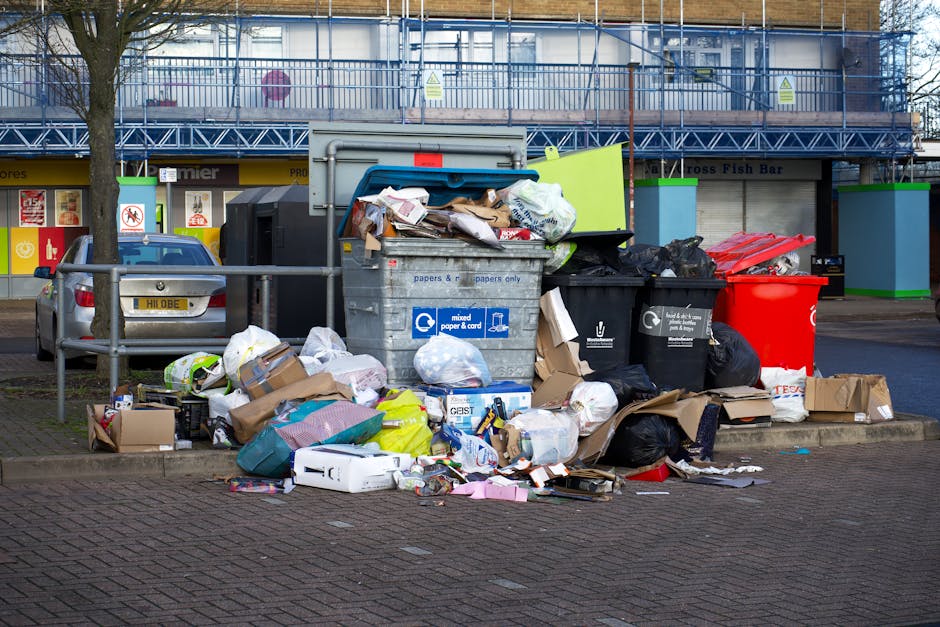
Another small but common slip is underestimating volume. A single sofa, a broken bed, and ten bags of mixed waste may not sound like much. Then you see them all together in a hallway and, well, the picture changes. Always worth measuring twice in spirit, if not with a tape measure.
Tools, Resources and Recommendations
You do not need specialist equipment for most small clearances, but a few basic tools and habits make the process smoother.
- Heavy-duty bags or boxes: Useful for grouping smaller items safely.
- Marker labels: Handy if you are sorting items to keep, recycle, or remove.
- Gloves: Especially useful for dusty loft items, garden debris, or sharp-edged waste.
- Protective floor coverings: Good for communal hallways or fresh flooring.
- Phone photos: Excellent for quotes and for remembering what is where.
For more support around responsible disposal, the recycling and sustainability page is worth reading. It gives a clearer sense of how reuse and recycling fit into a cleaner approach, which is usually what people want once they have got past the immediate mess.
You may also find the company background useful if you are comparing providers. The about us page and rubbish removal needs page can help you see whether the service feels like the right fit.
Law, Compliance, Standards, or Best Practice
Rubbish clearance in the UK should be handled carefully. You do not need to become a waste law expert, but you should expect responsible disposal, sensible documentation where appropriate, and a clear approach to safety.
In practical terms, that means checking that waste is collected and handled by a provider that works lawfully and does not dump it where it should not go. Fly-tipping is a real issue, and if waste is handled badly, the problem can come back to you in one way or another. That is not something anyone wants hovering in the background.
Good practice usually includes:
- clear descriptions of what is being removed
- safe lifting and loading methods
- appropriate handling of bulky or hazardous items
- attention to recycling where practical
- respect for shared buildings, access routes, and neighbours
If you are arranging clearance from a residential block or commercial premises, it is also wise to think about insurance, access safety, and any building-specific rules. The insurance and safety page covers those trust points in more detail. For payment transparency, the payment and security page is also useful.
Practical note: if you are ever unsure whether a particular item needs special handling, ask before collection. It is far easier than unpicking a mistake later.
Options, Methods, or Comparison Table
There is more than one way to clear rubbish near Ilford Station. The best method depends on volume, urgency, access, and what kind of waste you have. Here is a simple comparison.
| Method | Best for | Advantages | Possible drawbacks |
|---|---|---|---|
| DIY trips to a disposal site | Small, manageable loads | Can work for low volumes if you have transport and time | Time-consuming, physically demanding, parking and loading hassle |
| Scheduled waste collection | Routine waste and regular disposal needs | Predictable and simple to plan | Less flexible for urgent or bulky clear-outs |
| Professional rubbish clearance | Bulky, mixed, or awkward loads | Fast, convenient, and usually better for access-heavy jobs | Cost depends on load size and complexity |
| Specialist removal for builders' or garden waste | Renovation or outdoor clearance | Better handling of material type and volume | Needs accurate description of waste stream |
If you are deciding between general and specialist services, the simplest question is this: what is slowing you down most, the amount of waste or the effort of moving it? That answer usually points you in the right direction.
Case Study or Real-World Example
Here is a realistic scenario from the kind of job people around Ilford Station often face.
A small flat near the station needs clearing after a tenant move-out. There is a wardrobe, a mattress, several black bags, flattened cardboard, and a broken desk chair. Nothing extreme. But the flat is on an upper floor, the stairwell is narrow, and the street outside is busy by mid-morning. The occupier is also trying to hand the keys back by the end of the day.
In that situation, the winning move is to sort the items first, confirm access early, and arrange a collection time that avoids the busiest window. The mattress and wardrobe are noted in advance. Cardboard is separated. A couple of reusable items are kept back. The result is a faster removal, fewer trips through the building, and a much easier handover. Not glamorous, but it works.
That sort of job is very common. The actual waste may be modest, but the access and timing are what make the difference. Truth be told, around station areas, logistics often matter more than the pile itself.
Practical Checklist
Use this quick checklist before your clearance day. It is simple, but it saves headaches.
- Have I separated items I want to keep?
- Have I grouped the waste by type where possible?
- Do I know where the waste is located in the property?
- Is access clear for the collection team?
- Have I considered stairs, lifts, parking, and loading space?
- Have I asked for a clear quote?
- Do I know if any items need special handling?
- Have I protected floors or shared areas if needed?
- Have I checked for overlooked items in cupboards, loft spaces, or behind furniture?
- Do I know what happens next after the waste is removed?
If your clearance is tied to a house move, renovation, or business closure, it can help to read the relevant service pages in advance so there are fewer surprises on the day. A little preparation now usually feels very worth it later.
Get a free quote today and see how much you can save.
Conclusion
A good Ilford Station rubbish clearance guide should do one thing above all else: help you make a sensible decision without overcomplicating it. Near a busy station, the best results usually come from three simple habits - sort early, plan access properly, and choose a clearance method that fits the waste in front of you.
Whether you are clearing a flat, an office, a garden, or a renovation site, the goal is the same: remove what you do not need, do it safely, and keep the process tidy from start to finish. Once the clutter is gone, the space feels different. Lighter somehow. Quieter. Much easier to live with.
If you want to compare services, check related support pages, or simply understand your options a bit better, explore the links above and take the next step when you are ready. No rush. Just a clear, practical plan.
And if the pile is staring at you from the corner of the room right now, well, you are not the first person to feel slightly defeated by it. It can be sorted.